
Oklahoma
Page last updated: 6/4/2026
Oklahoma State Testing Program (OSTP), Administered by Cognia, ~$14.6million annually, Expires DATE
Public Districts: 541
Public Schools: 1781
K-12 Student Population: 660,650
Average Students Per Grade: 50,819
What to watch for: Cognia remains the OSTP vendor for 2025–26, but Oklahoma is shifting toward a commercial off-the-shelf model for grades 3–8 — allowing districts to select from a state-approved vendor list and contract directly, with the state reimbursing only summative assessment costs. This decentralization opens the door for vendors beyond Cognia to compete at the district level. Watch for the approved vendor list to be finalized and how the Cognia contract evolves beyond 2025–26.

Program Overview
two paragraph overview usually pulled from the DOE website
Document Library
Proposal Documents (RFP and related docs) most current
Assessment Manual
Performance Level Descriptors
Technical Manual
Assessment Blueprints
Governor’s education platform
ESSA Peer Review
Learning Standards
Alternate Assessment
ELP Assessment
DOE Strategic Plan
Test Guidance Documents
Who’s who in STATE?
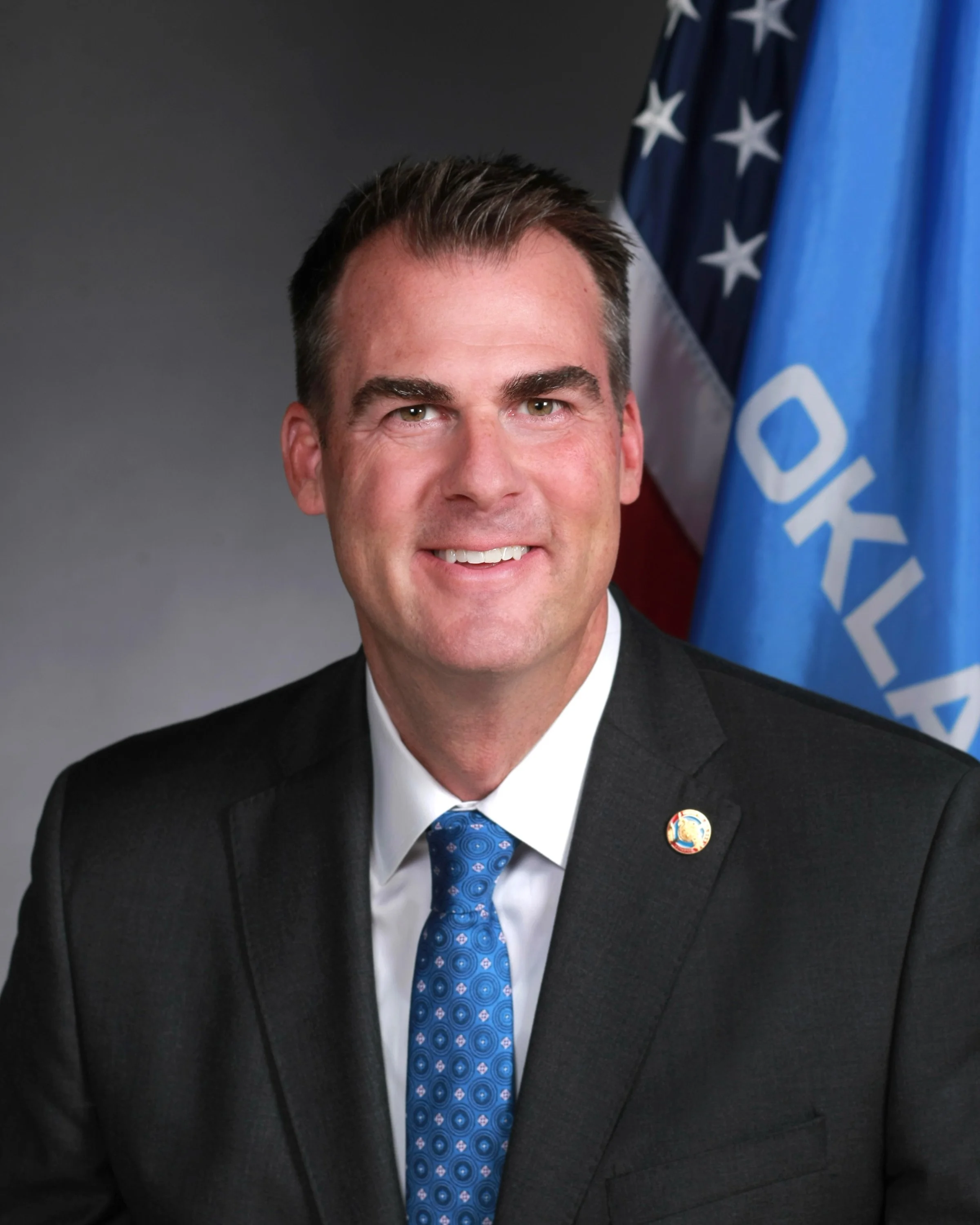
Kevin Stitt is the 28th Governor of Oklahoma, serving since January 2019. A Republican and businessman, he was re-elected in 2022 and is currently serving his second and final term due to term limits.

Lindel Fields is in charge of the Oklahoma Department of Education as the State Superintendent of Public Instruction. He was appointed to the position in October 2025 by Governor Kevin Stitt.
Download Contact List
Important Dates
Before Testing
OSTP Precode Window Nov 13, 2025 – Jan 9, 2026
Parent/Student/Teacher Guides (English) available Jan 9, 2026
Online Practice Tests available (Spring 2026) Jan 16, 2026
Test Preparation Manual available online (English) Jan 14, 2026
Test Administration Manual available online – Grades 3–5 (English) Jan 20, 2026
Test Administration Manual available online – Grades 6–8 (English) Jan 20, 2026
Portal User Guides posted Jan 28, 2026
TAM Grades 3–5 (Spanish, online only) Feb 3, 2026
TAM Grades 6–8 (Spanish, online) Feb 4, 2026
Student Information available in Portal Feb 9, 2026
DTC Administration & Technology Trainings (virtual) Feb 9, 11, 13, 17, 18, 19, 2026
Parent/Student/Teacher Guides (Spanish) available Feb 12, 2026
Test Materials arrive in districts Mar 25, 2026
TAMs arrive in districts (English) Mar 25, 2026
Begin creating test sessions in Online Assessment System Apr 6, 2026
Additional Test Material Order Window Mar 26 – May 1, 2026
TESTING WINDOWS
WIDA ACCESS (ELL students) Jan 5 – Mar 20, 2026
NAEP (online) Jan 26 – Mar 20, 2026
ACT (Grade 11 ELA & Math – CCRA Part 1) Window 1: Mar 24–27 & Mar 30–Apr 3
ACT (Grade 11) Window 2: Apr 7–10 & Apr 13–17
ACT (Grade 11 – makeup only) Window 3: Apr 21–24 & Apr 27–May 1
CCRA Grade 11 Science & U.S. History – Online Apr 1 – Apr 30, 2026
CCRA Grade 11 Science & U.S. History – Paper Apr 1 – Apr 10, 2026
OAAP/DLM (alternate assessment, all grades & subjects) Mar 24 – May 14, 2026
OSTP Grades 3–8 ELA, Math & Science – Paper/Pencil (accommodations only) Apr 13 – Apr 30, 2026
OSTP Grades 3–8 ELA, Math & Science – Online Apr 13 – May 13, 2026
Recommended window to receive G3–8 ELA preliminary results Apr 13 – May 1, 2026
AFTER TESTING
Paper test materials pickup (Cognia-scheduled) May 4, 2026
Preliminary Reports post in DI Portal Jun 2, 2026
Preliminary Reports post in Parent Portal Jun 9, 2026
Final Reports post in DI Portal TBD
Final Reports post in Parent Portal TBD
RFP Summary (year)
long form summary of what is in the most current RFP- include procurement notes.
Past Proposals
Cambium
HMH

Pearson
Official OSDE Resources
Assessments – Oklahoma.gov — Main OSDE assessments hub
State Testing Resources — Testing calendars, manuals, and coordinator resources
Assessment Materials — Grades 3–8 OSTP materials
Assessment Guidance — Instructional resources and assessment toolkits
OSTP for Families — Parent-facing info and the OSTP Parent Portal
College and Career Readiness Assessments (CCRA) — Grade 11 Science & U.S. History
Resources for Accountability Reports — School and district accountability data
Oklahoma School Report Cards — Interactive statewide results dashboard
OSTP Parent/Student Score Portal — Individual student score access
Cognia (Test Administrator) Resources
Oklahoma Help & Support – Cognia — Coordinator portal, manuals, and guides
OSTP & CCRA Manuals & PSTGs — TAMs, TPMs, and Parent/Student/Teacher Guides
Results & News Articles (2024–2026)
Understanding Oklahoma's 2025 Assessment Results – OEQA (Official) — Official state explanation of 2025 results and the cut score restoration
Oklahoma: 2025 Assessment Results – State Test Score Results (Substack) — Independent statewide analysis of 2024–25 scores
Oklahoma 2024–25 OSTP Results: Learning Loss Persists Despite Recovery Signs – Fuel OKC — OKC-focused analysis showing recovery trends vs. pre-pandemic levels
Tulsa Public Schools Spring OSTP Results Show Increased Proficiency – Tulsa Schools — District-level gains in math and ELA from 2023–2025
Oklahoma Releases A–F Grades for Public School Performance – Oklahoma Voice — December 2024 accountability grades tied to OSTP performance
OSTP Parent Letter: State Preliminary Testing Results 2023–2024 (PDF) — Official preliminary results letter for SY 2023–24
Legislative Summary
Published: May 2, 2026
Oklahoma Legislature: Overview
The Oklahoma Legislature is a bicameral body consisting of the Senate (48 members serving staggered 4-year terms) and the House of Representatives (101 members serving 2-year terms). The legislature convenes annually beginning the first Monday in February and is scheduled to adjourn by the last Friday in May. Oklahoma currently operates under a Republican trifecta — the GOP controls the governorship and holds supermajorities in both chambers (80 Republicans to 20 Democrats in the House as of early 2025). The 60th Legislature completed its 2nd Regular Session in May 2026, adjourning ahead of schedule after reaching an early budget agreement of $12.8 billion for FY2027.
2025 Session Highlights
The 2025 session was characterized as quieter than the historic education funding packages of 2023 and 2024, but still produced meaningful legislation.
Funding. Lawmakers added $25 million into the state education funding formula. No major tax reform passed.
Teacher retention. HB 1087 extended teacher step raises through 35 years of service (previously capped at 25). HB 1727 opened eligibility for the OHLAP college tuition scholarship program to families of 10-year veteran teachers at up to 700% of the federal poverty level (~$186K for a family of three).
Math achievement. SB 140, the Oklahoma Math Achievement and Proficiency Act, allocated $1 million for foundational math instruction reforms, including three-times-per-year math screenings for grades 2–5, intervention supports, dyscalculia screening, and stipends for teacher professional development.
Cell phone ban. SB 139 required all districts to adopt "bell-to-bell" cell phone ban policies for the 2025–26 school year, with narrow exemptions for health monitoring or emergencies.
School choice. SB 105 removed the prior public school enrollment requirement for the Lindsey Nicole Henry Scholarship, allowing students with disabilities to access private school tuition assistance without first attending public school.
Assessment-related. SB 711 eliminated chronic absenteeism as a scored component of the A-F School Report Card and added bonus points for schools exceeding 180 instructional days. HB 1393 required the State Board of Education to adopt parental consent forms for whether students with IEPs participate in the Oklahoma Alternative Assessment Program (OAAP).
DEI ban codified. SB 796 codified into law Governor Stitt's 2024 executive order prohibiting state funds from supporting diversity, equity, and inclusion programs at public colleges and universities.
Notable failures. The legislature rejected two of State Superintendent Ryan Walters' administrative rule proposals: requiring schools to document undocumented students and requiring teachers to pass a U.S. naturalization test. His $3 million request for classroom Bibles also failed. Controversial new social studies standards, which included 2020 election denialism language, were tacitly allowed to take effect after initial GOP pushback.
2026 Session Highlights
Education dominated the 2026 session, described by House Speaker Kyle Hilbert as producing "the best literacy law in the entire country."
Early literacy and third-grade retention. SB 1778 — the flagship bill of the session — requires third graders who score below basic on the state reading test and fail a second literacy assessment to repeat the grade, unless they qualify for a narrow exemption. The law is modeled on Mississippi's successful early literacy reforms. It was accompanied by $232 million in new public education funding, including $26 million for reading instruction and $7.5 million for math.
Teacher pay. The FY2028 budget includes $100 million to raise minimum teacher salaries by $2,000.
School security. A permanent $50 million fund for school security was established.
Instructional time. HB 3151 will increase the minimum school year from 166 to 173 days for districts meeting the 1,086-hour requirement, effective in 2027–28 — contingent on the education budget remaining $175 million above current levels.
Permanent cell phone ban. The 2025 bell-to-bell cell phone ban was made permanent.
AI in schools. SB 1734, passed unanimously, prohibits AI tools from being used as the primary basis for grading, discipline, or promotion, and restricts their classroom use to educator-directed contexts.
Teacher quality. HB 4427 tightened requirements for adjunct teachers, banning adjuncts from teaching core subjects in pre-K through 4th grade and requiring those without a bachelor's degree to be enrolled in one or demonstrate 20+ years of distinguished experience.
School choice expansion. HB 3705 raised the school choice tax credit cap to $275 million to ensure no families are waitlisted.
Assessment-related. The cut score restoration (returning OSTP proficiency thresholds to 2023 levels after they were lowered in 2024) was not a legislative action but was directed by the Commission for Educational Quality and Accountability (CEQA), and was the backdrop for much of the legislative conversation around literacy and accountability in 2026.
Notable failures. Governor Stitt's proposal to make the State Superintendent a gubernatorial appointee rather than an elected position failed in the Senate. Bills to expand the State Board of Education and limit elementary school screen time also failed.