
Maine
Page last updated: 6/9/26
Maine Comprehensive Assessment System (MECAS), Administered by NWEA, ~$ million annually, Expires 2028
Public Districts: 275
Public Schools: 589
K-12 Student Population: 168,923
Average Students Per Grade: 12,994
What to watch for: NWEA remains Maine's through-year assessment vendor for 2025–26 despite the state's September 2024 procurement (RFP #202406122) seeking a potential new vendor — watch for whether a contract change is announced for 2026–27 and how the DOE's new Reading and Math Action Plans influence any future assessment model decisions.

Program Overview
two paragraph overview usually pulled from the DOE website
Document Library
Proposal Documents (RFP and related docs) most current
Assessment Manual
Performance Level Descriptors
Technical Manual
Assessment Blueprints
Governor’s education platform
ESSA Peer Review
Learning Standards
Alternate Assessment
ELP Assessment
DOE Strategic Plan
Test Guidance Documents
Who’s who in STATE?
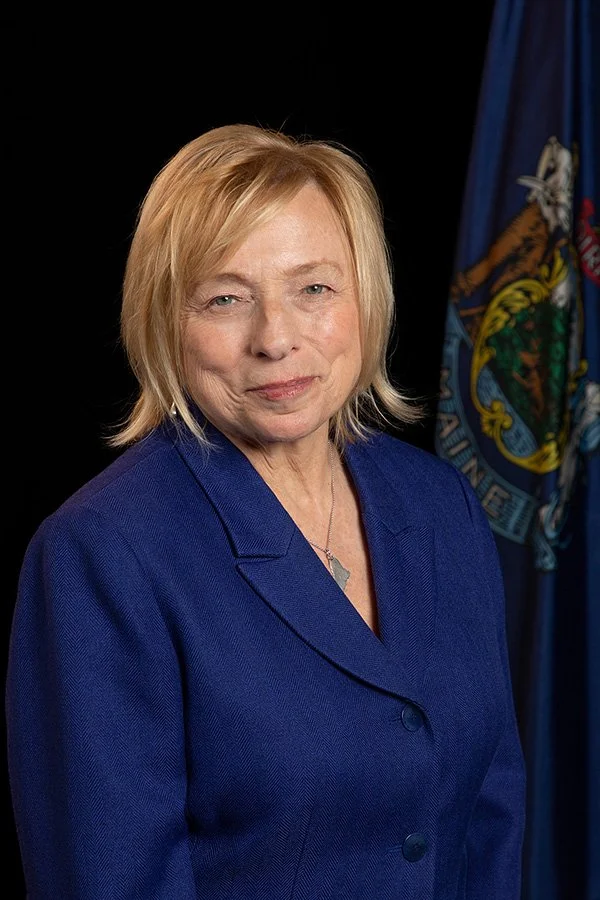
Janet T. Mills is the 75th Governor of Maine, a Democrat who has served since January 2019 after previously serving as the state's Attorney General for eight years. She was re-elected in 2022 and is currently serving her second and final consecutive term, making her ineligible to run again in the 2026 gubernatorial election.

Pender Makin has served as Maine's Commissioner of Education since 2019, appointed by Governor Janet Mills. A former classroom teacher and long-time principal of The REAL School on Mackworth Island, she is a 2001 Milken Educator Award recipient and brings over two decades of public education experience to the role, with a focus on restorative justice, dropout prevention, and innovative learning models.
Download Contact List
Important Dates
Assessment dates for the 2025-2026 school year:
ACCESS for ELLs (English Language Proficiency) Jan 5 – Mar 10, 2026
Alternate ACCESS for ELLs Jan 5 – Mar 10, 2026
Maine Through Year Assessment – Math & Reading (Fall, required) Sep 15 – Oct 24, 2025
Maine Through Year Assessment – Math & Reading (Winter, optional) Jan 5 – Feb 13, 2026
Maine Through Year Assessment – Math & Reading (Spring, required) Apr 13 – May 29, 2026
Maine Science Assessment – High School Apr 1 – May 1, 2026
MSAA: Math & ELA/Literacy (alternate) Mar 9 – Apr 24, 2026
MSAA: Science (alternate) Mar 9 – Apr 24, 2026
Maine Science Assessment – Grades 5 & 8 May 11 – May 29, 2026
NAEP Jan 26 – Mar 20, 2026 Math & Reading grades 4, 8 & 12; U.S. History & Civics grade 8 (sampled schools)
RFP Summary (year)
long form summary of what is in the most current RFP- include procurement notes.
Past Proposals
Cambium
HMH

Pearson
RFP Award Calculator
Official Maine DOE Resources
Maine Comprehensive Assessment System (MECAS) – Home
Maine Assessment Calendar 2025–2026
Maine Through Year Assessment: Math & Reading (NWEA)
English Language Proficiency (ACCESS)
National & International Assessments
Resources from the Assessment Team
Maine's Model of School Support (Accountability)
MECAS Guidelines 2024–25 (PDF)
NWEA (Test Administrator) Resources
Maine Through Year Assessment Reports Interpretive Guide (PDF)
Maine Through Year Assessment Coordinator Guide (PDF)
Maine Through Year Assessment Administration Guide (PDF)
Maine Connection – NWEA Portal
Q&A: Maine Through Year Assessment Scoring & Reporting (PDF)
Results & News Articles (2024–2026)
Maine: 2025 Assessment Results – State Test Score Results (Substack) — Statewide analysis: ~65% proficient in ELA, ~50% in math for grades 3–8
Maine Students Score Lowest in Three Decades on Nation's Report Card – Maine Morning Star (Jan. 2025) — 2024 NAEP results; lowest scores since 1992 in three of four categories
Maine Students Score Lowest in Three Decades – Bangor Daily News (Jan. 2025) — Additional coverage of the 2024 NAEP declines
National Report Card Shows Maine Students Falling Behind – WGME — TV news coverage of NAEP results and contributing factors
Lawmakers Question Maine Officials on Poor Math and Reading Scores – Portland Press Herald (Feb. 2025) — Legislative response to 2024 NAEP results
Maine Students Haven't Recovered Academically Post-Pandemic – Maine Morning Star (Feb. 2025) — Analysis of chronic absenteeism (23% in 2023–24) and literacy program gaps
5 Takeaways from Reporting on Maine's Test Scores – The Maine Monitor — Contextual analysis of score trends
2024 NAEP Reading State Snapshot – Maine Grade 4 (NCES PDF) — Official federal report card data
Legislative Summary
Published: May 2, 2026
Maine Legislature: Overview
The Maine Legislature is a bicameral body consisting of the Senate (35 members) and the House of Representatives (151 members). All members serve 2-year terms, and both chambers enforce term limits of four consecutive terms (eight years) per chamber, making Maine one of the stricter term-limit states in the country. The legislature meets annually, with regular sessions typically running from January through June. Maine currently operates under a Democratic trifecta — Democrats hold majorities in both chambers and the governorship under Janet Mills, though margins have been narrow and the state has a strong independent political tradition. The 132nd Legislature convened in January 2025 and concluded its regular session in spring 2026, described by observers as "a more active session than what we've seen in a while in terms of education-related decisions."
2025–2026 Session Highlights
School Funding Formula Overhaul. The most structurally significant education action of the session was the passage of LD 2226 — An Act to Amend the Essential Programs and Services School Funding Formula — the first substantial revision to Maine's school funding model since it was established in 2004. The new law adjusts how the state weights funding for economically disadvantaged students and ties salary adjustments to the cost-of-living index. The changes do not take full effect until the 2027–28 school year but represent a major policy shift after two decades without reform. The funding formula adjustments made up the vast majority of the roughly $50 million in education spending included in the supplemental budget.
Teacher Pay. The Legislature approved incremental increases to the state's minimum teacher salary, raising it from $40,000 — where it had been stuck since 2022 — to $50,000, phased in over three years through 2028–29. Maine teacher pay had long lagged behind the national average and neighboring states, and the raise was a top priority for the state's educators' union.
Cell Phone Ban. Maine passed a bell-to-bell cell phone ban requiring all school districts to prohibit student use of personal electronic devices from the start to the end of the school day. School boards must have compliant policies in place by August 1, 2026. The state allocated $350,000 to support district implementation, including the costs of pouches or locking mechanisms.
Reading and Math Action Plans. In October 2025, the Maine DOE announced twin State Reading and Math Action Plans — the most concrete administrative response yet to the state's declining NAEP scores. The plans center on evidence-based instruction, Science of Reading-aligned literacy practices, universal screeners in early grades, and stronger support for teacher preparation. The DOE also expanded free professional development access through the AIM Institute's Steps to Literacy modules, through which approximately 650 educators completed more than 20,000 hours of structured literacy training. The Reading League characterized Maine's state policy framework as moving in the right direction but still lacking statutory enforcement mechanisms.
Continued NAEP Accountability Pressure. Reporting from the Maine Monitor and the Portland Press Herald in late 2025 documented the state's prolonged academic decline, noting that Maine fourth graders now rank in the bottom 15 states in reading and math — a dramatic fall from the state's status as a top performer in the 1990s and 2000s. With 68% of fourth graders and 72% of eighth graders performing at or below the basic reading level, the reporting highlighted a long-term erosion tied to weakened accountability policies, high local-control, chronic absenteeism, and lack of systemic curriculum tracking. This coverage added public pressure to the legislative session.
Assessment Continuity. NWEA continued as Maine's through-year assessment vendor for 2025–26 under the Maine Comprehensive Assessment System (MECAS), with updated RIT score norms and revised guidelines issued in September 2025. Despite the September 2024 procurement (RFP #202406122) that sought a potential new vendor, NWEA's through-year MAP Growth model remained in place for the current school year. The 2025–26 MECAS Guidelines were updated in fall 2025 to reflect the new scoring norms.
Free Community College Made Permanent. The Legislature voted to make permanent the Free Community College program, which had operated as a pilot since 2022. More than 23,000 students have graduated under the scholarship, and the program has become one of Governor Mills' signature higher education initiatives in her final term.
School Bus Safety. Following the deaths of two Maine students struck by their own school buses during the school year, the Legislature allocated approximately $6 million for safety enhancements across the state's fleet, including cameras, stop-arm systems, and crossing guards.
School Construction. The session included consequential reforms to school construction funding, addressing a backlog of deferred maintenance and facility needs across Maine's often aging rural school infrastructure.
Notable Context. Governor Mills is term-limited and will not appear on the 2026 ballot. Democratic candidates for governor have largely endorsed her education legacy while signaling openness to more structural accountability reforms, reflecting the ongoing tension in Maine between local-control traditions and growing urgency around academic outcomes. The 132nd Legislature's education record — particularly the funding formula change, teacher pay increase, and literacy action plan — will likely serve as a central reference point in the 2026 gubernatorial race.