
Virginia
Page last updated: 05/13/2026
Virginia Standards of Learning Assessment Program (SOL Test), Administered by Pearson, ~$25 million annually, Expires December 31, 2027
Public Districts (School Divisions in VA): 131
Public Schools: 2,139
K-12 Student Population: 1,209,057
Average Students Per Grade: ~92,307
What to watch for: Virginia is actively in procurement mode. The Pearson contract (now extended six times over 20 years) is expiring, and VDOE is seeking a new five-year, $125M contract; making this one of the larger active state assessment RFPs to watch right now. A contractor was hired to provide a report on focused on researching and recommending what a future system should look like. The report should be out shortly and an RFP should follow.

Program Overview
The Standards of Learning (SOL) for Virginia Public Schools establish minimum expectations for what students should know and be able to do at the end of each grade or course in English, Mathematics, Science, History, Social Science, and other subjects.
SOL tests measure students' success in meeting the Board of Education’s expectations for learning and achievement. All items on SOL tests are reviewed by Virginia classroom teachers for accuracy and fairness, and teachers also assist the Virginia Board of Education in setting proficiency standards for the tests.
Document Library
Proposal Documents (RFP and related docs) most current
Assessment Manual
Performance Level Descriptors
Technical Manual
Assessment Blueprints
Governor’s education platform
ESSA Peer Review
Learning Standards
Alternate Assessment
ELP Assessment
DOE Strategic Plan
Test Guidance Documents
Who’s who in STATE?
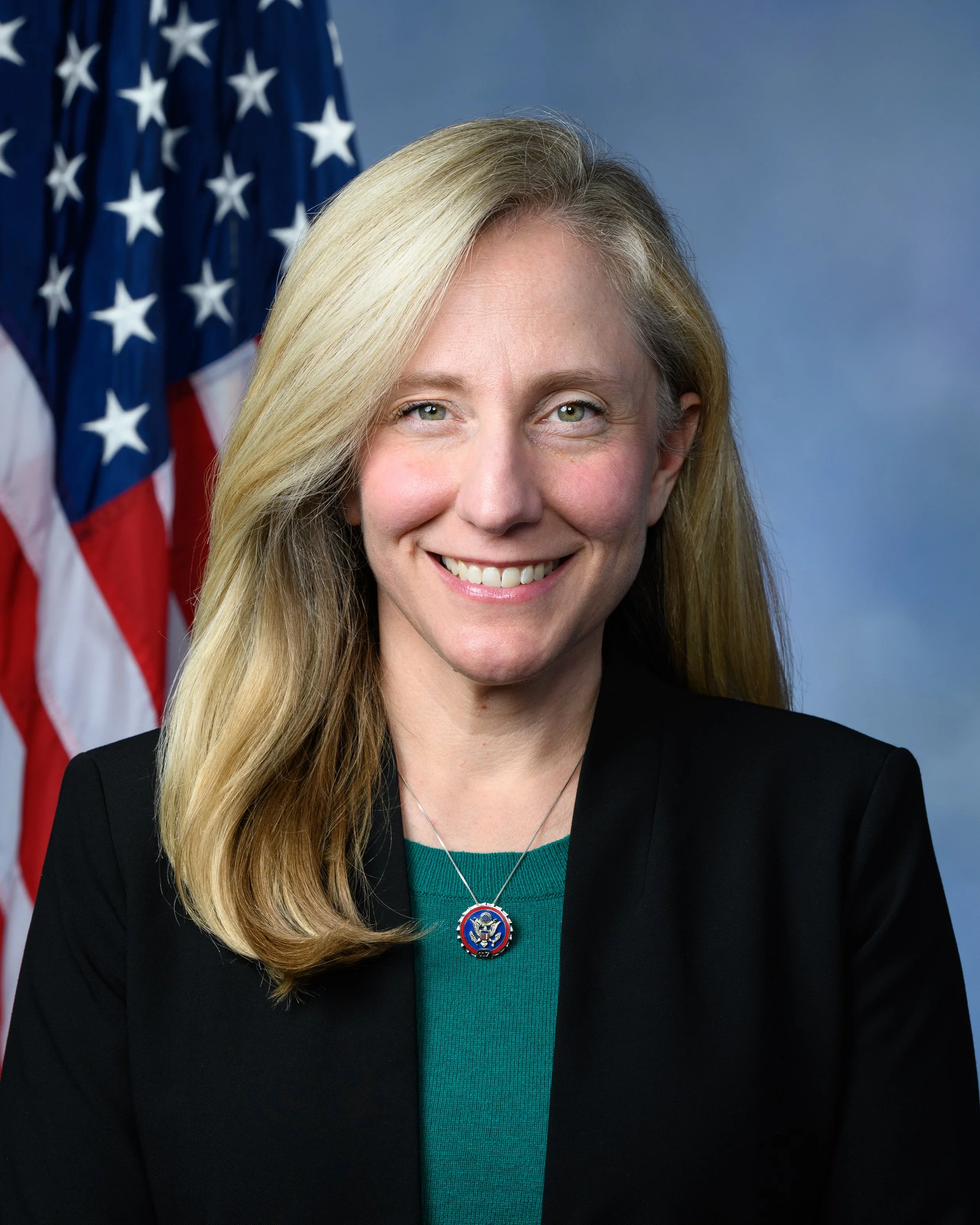
Abigail Spanberger is the 75th Governor of Virginia, a Democrat and former U.S. Representative and intelligence officer, who was sworn in on January 17, 2026 — making her Virginia's first female governor. On her first day in office, she signed ten executive orders focused on affordability, strengthening public schools, protecting Virginia's economy, and keeping communities safe. Among her early priorities, she has emphasized rejoining the Regional Greenhouse Gas Initiative, opposing federal tariffs, and supporting displaced federal workers in the Commonwealth.
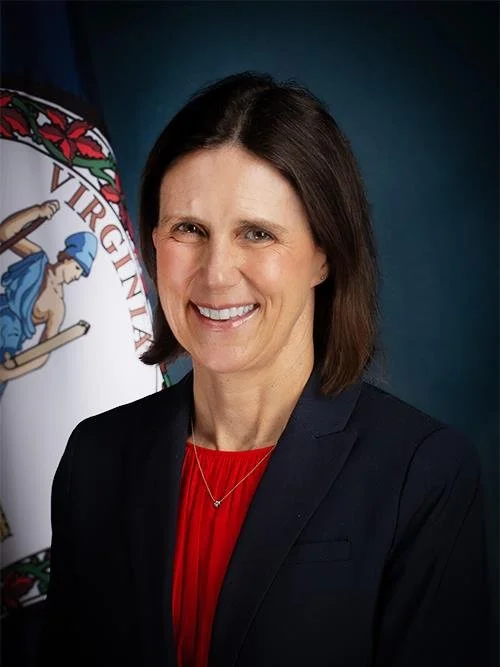
Jenna Conway is currently serving as the Superintendent of Public Instruction. Over the past seven years, Conway has spearheaded Virginia’s efforts to strengthen its birth-to-five early childhood care and education system, ensuring every child is prepared for kindergarten and beyond. Her leadership extends to overseeing special education, behavioral health and student safety, and adult education, with a steadfast commitment to supporting all learners regardless of ability, age or background.
Download Contact List
Important Dates
Fall Testing (2025-2026 school year)
Sept. 8 – Oct. 2: Fall VALLSS (Virginia Language & Literacy Screening System) for Grades 1–2 and identified Grades 3–5 students
Sept. 8 – Sept. 19: Fall IXL Flex Diagnostics (VGA Alternative) in Math and Reading for Grades 1–5
Sept. 22 – Oct. 17: Virginia Kindergarten Readiness Program (VKRP) for Pre-K–K
Oct. 6 – Oct. 31: Fall VALLSS for Pre-K–K
Winter Testing
Dec. 1 – Dec. 12: Winter IXL Flex Diagnostics (VGA Alternative) in Math and Reading for Grades K–5
Jan. 5 – Jan. 30: Mid-Year VALLSS for Pre-K–3 and identified Grades 3–5 students
Spring Testing (Primary SOL Window)
April 13 – May 15: Spring VKRP for Pre-K–K
April 20 – May 1: Spring VALLSS for Pre-K–2
April 27 – May 1: Grade 5 Spring Non-Writing Integrated Reading and Writing (IRW) Component SOL
May 18 – June 10: Spring Non-Writing SOLs for Grades 3–5 (Reading, Mathematics, Virginia Studies Grade 4, Science Grade 5)
April 20 – May 22: High school non-writing SOL End-of-Course tests (per Fairfax County, representative of the statewide window)
May 28 – June 3: High school SOL retakes
RFP Summary (2026)
There are actually two separate RFPs in play:
RFP #201-26-028 — Assessment Consultant (Already Awarded) This is the smaller, $500K RFP that VDOE issued on October 6, 2025. Its purpose was to procure an assessment vendor to analyze options for implementing a new statewide assessment system. VDOE received five responses and anticipated awarding the contract by November 15, 2025. This consultant engagement ran November 2025–March 2026 and was focused on researching and recommending what a future system should look like, not delivering it. That contract was awarded to WestEd and the work is likely wrapping up.
Full Assessment System (Not Yet Issued) VDOE is seeking $125 million for a new five-year contract to develop, administer, score, and report statewide student assessments, including the SOL tests. The General Assembly authorized VDOE to extend the existing Pearson contract through December 31, 2027, to ensure continuity of testing while a new contract is secured. Based on the timeline — with the consultant's report due in early 2026 and informing GA decisions — the full assessment system RFP likely hasn't been issued yet.
Where to Monitor It All VDOE solicitations and resulting contract awards are posted in eVA, Virginia's eProcurement system, under Virginia Business Opportunities (VBO), using "Department of Education" as the buying entity. The direct URL to watch is eva.virginia.gov — search for "Department of Education" as the buyer and filter for assessment-related solicitations.
The full RFP, when issued, will likely be the largest state assessment procurement to come to market in several years. Given the Pearson extension runs through end of 2027, we expect the competitive RFP to drop sometime in 2026, with a transition period before a new vendor goes live.
Past Proposals
Cambium

HMH

Pearson
RFP Award Calculator
VDOE Official Pages
SOL Test Administration & Development — testing calendars, implementation manuals, examiner resources
SOL Test Pass Rates & Other Results — official data files by year, including 2024–25
VDOE Procurement Page — for monitoring future RFP postings
eVA eProcurement Portal — where the full assessment system RFP will be posted
VDOE Official News Releases
2024–25 SOL Results Release (Aug. 27, 2025) — High school math SOL results rose to 84% in 2023–24, up from 81%; science improved to 71%; reading dipped slightly to 84%
2025 SOL Progress Report Document — Grades 3–8 reading pass rates ranged from 66.7%–73.0% and math from 64.2%–72.4% in 2024–25
NAEP Results + SOL Validation (Jan. 29, 2025) — NAEP results were cited as validating Virginia's SOL scores, with grade 4 math gains and ongoing grade 8 declines reflecting pandemic learning loss
GA Report: Statewide Assessment Vendor Update (Nov. 1, 2025) — details on RFP 201-26-028 and the Innovative Assessment Work Group
News Articles — Results & Performance
WTVR: Virginia Students Show Steady Improvement on SOLs (Aug. 27, 2025) — Science led improvements at +3 points (68%→71%); reading +1 (73%→74%); math +1 (71%→72%); history +1 (65%→66%); writing held at 76%
The Richmonder: Five Things to Know About 2024–25 SOL Scores (Oct. 2025) — local and state-level breakdown with equity lens
Bacon's Rebellion: Understanding 2025 SOL Performance & Standards (Sept. 2025) — critical analysis of how equating affected reported pass rates
News Articles — Policy, Reform & Procurement
Virginia Mercury: Virginia Overhauls SOL Testing (May 12, 2025) — HB1957 enacted sweeping bipartisan changes; SOLs will count as 10% of final grades and be administered in the final two weeks of school, effective 2026–27
Virginia Mercury: Higher SOL Cut Scores Coming, But Not This Year (Nov. 14, 2025) — Board approved a four-year phase-in plan; proficient cut score stays at 400 in 2025–26 before rising to 446 by 2028–29
Virginia Mercury: Ed Dept Pushes Back on Stalled Assessment Plan (Sept. 29, 2025) — background on the procurement delays and Pearson contract extension
Daily Progress: VDOE Seeks $125M for New Assessment System (Oct. 2024) — the original $125M/5-year procurement framing
FCPS: Changes to SOL Assessments in Virginia — good practitioner-level summary of HB1957 implications
Northern Virginia Magazine: New Legislation Could Affect SOLs (Jan. 2025)
Published: May 13, 2026
Virginia General Assembly: Legislative Summary
About the Legislature
The Virginia General Assembly has operated since 1619, when it was originally known as the House of Burgesses, making it one of the longest continuously operating democratic legislative bodies in the history of the world. The House of Delegates has 100 members elected every two years, while the Senate of Virginia has 40 senators elected every four years. Under the Virginia Constitution, the General Assembly convenes on the second Wednesday of every January. In even-numbered years, the session lasts 60 days and lawmakers must adopt a two-year budget; in odd-numbered years, they meet for 45 days. All daily House and Senate proceedings are open to the public and streamed online, as are all committee hearings.
2025 Session (Short Session — 45 Days)
The 2025 General Assembly session adjourned on February 22, 2025. Of 1,994 total bills introduced, 917 passed both chambers. Key highlights included:
Education Funding The session provided $52.8 million for a special education add-on and $134.4 million for a one-time $1,000 bonus for teachers and school support staff requiring no local match. Funding for English Learner teachers increased substantially based on updated enrollment data.
SOL Assessment — HB1957 (Major Reform) In a rare moment of bipartisan agreement, Virginia enacted sweeping changes to the state's K-12 testing system. HB1957 requires SOL scores to count as 10% of a student's final grade, a significant shift from current policy, and moves test administration to the final two weeks of the school year, away from the previous practice of testing five to six weeks earlier. The legislation also requires release of more past exams for practice purposes and is designed to raise test quality under the new assessment contract. The legislation takes effect at the start of the 2026–27 school year.
VGA Alternative Assessments The 2025 session extended legislation permitting school boards to administer alternative assessments in lieu of the Virginia Growth Assessments through the 2025–26 school year, provided they are aligned to the SOLs and approved by VDOE.
Assessment Procurement Authorization The legislature appropriated $500,000 for VDOE to procure an assessment consultant to analyze options for a new statewide assessment system, and authorized a one-year extension of the Pearson contract through December 31, 2025, with a subsequent extension through December 31, 2027 to ensure testing continuity during the new procurement process.
2026 Session (Long Session — 60 Days, Democratic Trifecta)
The 2026 General Assembly session adjourned on March 14, 2026. After major Democratic gains in the House of Delegates and new Democratic leadership in the executive branch following the 2025 elections, the session brought a whole new level of discourse, shifting the policy dialogue considerably. The House introduced 1,530 bills and the Senate introduced 836. With Gov. Abigail Spanberger in the executive mansion and Democratic majorities in both chambers, lawmakers moved swiftly to pass a wide range of priorities that had stalled under divided government.
Budget Impasse Lawmakers adjourned without a new two-year budget after an unexpected dispute over data center tax breaks fractured negotiations among Democrats who otherwise controlled every lever of power in Richmond. The standoff centered on a proposal by Senate Democrats to eliminate the longstanding sales tax exemption for data centers, estimated to generate roughly $1 billion in revenue; which House leaders and Gov. Spanberger opposed. A special session was convened April 23 to finalize the budget.
Education — K-12 Funding & Support The session fully lifted the support staffing cap ($223 million), returning flexible spending to localities; funded a special education add-on of $53 million; provided $12 million for a Math Advisory Task Force and math specialist micro-credentials; and approved $150 million in school construction grants. A $134 million one-time $1,000 teacher and support staff bonus was also approved.
Education — Collective Bargaining (Historic) The session produced landmark legislation making collective bargaining contracts for educators and nearly all public employees a reality for the first time in more than 70 years. Virginia became the first state in the South to restore collective bargaining rights for public sector employees.
Education — SOL and Assessment Adjustments Gov. Spanberger signed 21 bills focused on K-12 education by early April, including changes to the Standards of Learning and increased parental involvement in course selection. With HB1957 from 2025 now in effect for 2026–27, the General Assembly also considered tweaks to the assessment reform legislation during the 2026 session, with lawmakers debating concerns about SOL scores counting toward grades and the compressed testing window.
The Virginia Board of Education separately endorsed a four-year phased plan to raise SOL cut scores, with the proficient threshold holding at 400 in 2025–26 before rising to 446 by 2028–29, a decision with significant downstream implications for school accreditation, graduation rates, and the new assessment contract's design requirements.
Education — AI in Schools HB1186/SB394, signed into law, requires school divisions and their stakeholders to gather relevant information on artificial intelligence systems and use such findings to offer guidance for appropriate use of AI in instructional learning environments, and establishes an AI Innovation in Education Pilot Program. The bill passed the House 95–0.
Education — Low-Performing Schools HB924, signed by Spanberger on April 6, 2026, conditions support for low-performing schools on meeting certain performance benchmarks, aiming to improve outcomes in the Commonwealth's most challenged school divisions.
Education — School Safety & Well-Being A broad package of bipartisan school safety legislation was signed into law, including measures to strengthen how schools identify and respond to potential threats, improve mental health resources, modernize student safety education, and provide additional tools for educators working with at-risk youth.
Career & Technical Education Bills signed into law made it easier to credential career and technical education teachers and aligned CTE course offerings with emerging industry and workforce needs — both passed unanimously.
Broader Legislative Highlights The session's broader Democratic agenda also included raising Virginia's minimum wage to $15/hour by January 1, 2028; advancing constitutional amendments on reproductive freedom, marriage equality, and automatic voting rights restoration for returning citizens; and a package of gun reform measures. The session also legalized and created a regulatory framework for cannabis retail sales and "skill games" in convenience stores.
Key Ongoing Issues to Watch The budget special session (ongoing as of May 2026) will determine final educator pay increases for 2026–28. The data center tax exemption dispute remains unresolved and will shape how much revenue Virginia has available for education investments. And the full assessment system RFP — authorized but not yet issued — will be one of the largest K-12 procurement actions in the Commonwealth's recent history.