
New York
Page last updated: 05/10/2026
New York State Testing Program (NYSTP), Administered by HEM, ~14.4 million annually, Expires 11/30/2026
Public Districts: 675
Public Schools: 4,816
K-12 Student Population: 2,506,634
Average Students Per Grade: ~192,000
With the contract expiring November 30, 2026, a new RFP for this program is likely to be released sometime in late 2025 or 2026 — and notably, nothing has surfaced publicly yet. Given the Regents Examinations scoring RFP (#253) that posted in May 2026, NYSED is actively procuring in the assessment space. The Grades 3–8 re-procurement will be a significant opportunity, as it is the largest single assessment contract in the state. Worth monitoring closely
Program Overview
The New York State Education Department Office of State Assessment is responsible for the coordination, development, and implementation of various examinations aligned with the New York State Learning Standards:
The Office of State Assessment also administers the National Assessment of Educational Progress (NAEP) test, which has frequently been called The Nation’s Report Card.
These examinations are administered to students in Kindergarten through Grade 12 enrolled in public, nonpublic, and charter schools throughout the State.
Document Library
Proposal Documents (RFP and related docs) most current
Assessment Manual
Performance Level Descriptors
Technical Manual
Assessment Blueprints
Governor’s education platform
ESSA Peer Review
Learning Standards
Alternate Assessment
ELP Assessment
DOE Strategic Plan
Test Guidance Documents
Who’s who in STATE?

Kathy Hochul is the 57th and current Governor of New York, in office since August 24, 2021. A Democrat, she is the first female governor in the state's history and won a full four-year term in 2022. As of May 2026, she is focused on enacting a $268 billion FY 2027 state budget, which prioritizes affordability and child care.
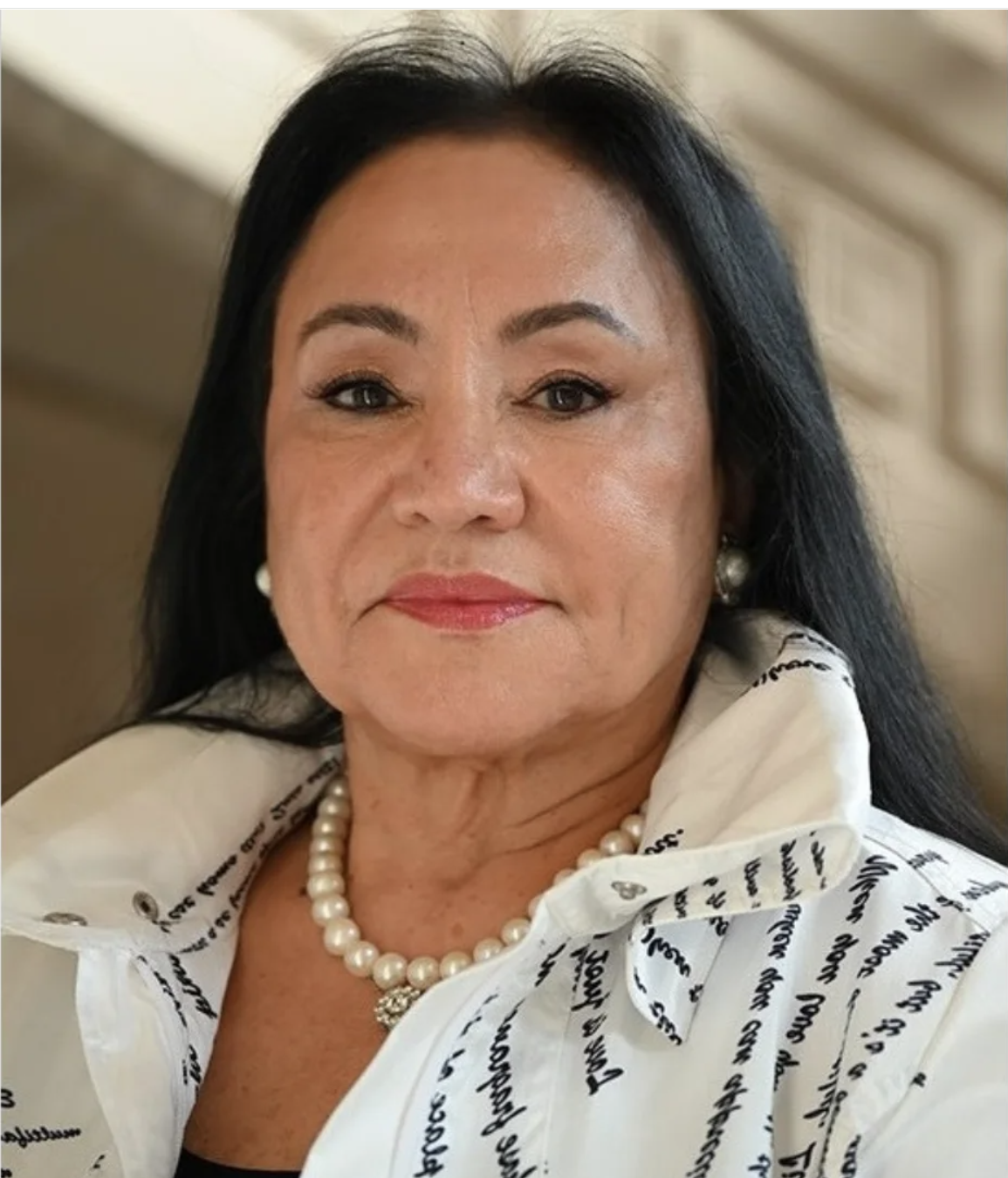
Dr. Betty A. Rosa is the Commissioner of Education and President of the University of the State of New York (USNY).
Dr. Rosa was appointed as permanent Commissioner on February 8, 2021, by the Board of Regents. She is the first Latina woman to serve in the position.
Download Contact List
Important Dates
Grades 3–8 ELA, Mathematics & Science Tests
The main administration window for Grades 3–8 ELA, Mathematics, and Grades 5 & 8 Science Tests runs Monday, April 6 – Friday, May 15, 2026. Makeups must be administered within the same window. Scoring must be completed by Friday, May 22.
Key administration notes:
For ELA and Math computer-based tests, schools select two consecutive days within the window for each grade level and subject. The entire grade must test on the same two consecutive days.
For Grades 5 & 8 Science CBT, schools must test the entire grade on the same single day.
Spring 2026 marks the first year all students in Grades 3–8 are required to take ELA, Math, and Science via computer-based testing (CBT).
NYSAA (Alternate Assessment) The NYSAA window runs Monday, March 9 – Friday, June 5, 2026.
NYSESLAT (English Language Proficiency)
Speaking component: April 6 – May 22, 2026
Listening, Reading & Writing: May 4 – May 22, 2026 | Scoring: May 26 – June 5 | Answer sheet deadline: June 5, 2026
Regents Examinations (High School)
Regents are offered three times per year — January, June, and August.
January 2026 Administration
Tuesday, Jan. 20 — English Language Arts (9:15 a.m.); Life Science: Biology / Living Environment / Physical Setting Chemistry (1:15 p.m.)
Wednesday, Jan. 21 — Geometry / U.S. History & Government (9:15 a.m.); Algebra I / Physical Setting Physics (1:15 p.m.)
Thursday, Jan. 22 — Global History & Geography II (9:15 a.m.); Algebra II (1:15 p.m.)
Friday, Jan. 23 — Earth and Space Sciences / Physical Setting Earth Science (9:15 a.m.)
June 2026 Administration
Tuesday, June 9 — English Language Arts (9:15 a.m.); Physical Science: Chemistry/NYSP12SLS (1:15 p.m.)
Wednesday, June 10 — Algebra II (9:15 a.m.); Physical Science: Physics/NYSP12SLS (1:15 p.m.)
Wednesday, June 17 — Algebra I (9:15 a.m.); Global History & Geography II (1:15 p.m.)
Thursday, June 18 — Life Science: Biology / Living Environment (9:15 a.m.); Earth and Space Sciences / Physical Setting Earth Science (1:15 p.m.)
Friday, June 19 — No exams — Juneteenth Holiday
Monday, June 22 — Rating Day
Tuesday, June 23 — U.S. History & Government (9:15 a.m.); Geometry (1:15 p.m.)
Wednesday, June 24 — Physical Setting Chemistry (9:15 a.m.)
Thursday, June 25 — Physical Setting Physics (9:15 a.m.)
Friday, June 26 — Rating Day
August 2026 Administration
Tuesday, August 18 — Algebra I / English Language Arts (8:30 a.m.); Global History & Geography II / Algebra II (12:30 p.m.)
Wednesday, August 19 — U.S. History & Government / Earth and Space Sciences / Physical Setting Chemistry / Physical Science: Chemistry NYSP12SLS (8:30 a.m.); Geometry / Life Science: Biology (12:30 p.m.)
Notable Context for 2025–26
June 2025 marked the first administration of the new Regents Examinations in Life Science: Biology and Earth and Space Sciences (replacing Living Environment and Physical Setting/Earth Science, respectively, after June 2026).
June 2026 will mark the first administration of the new ELA Regents aligned to the Next Generation Learning Standards (NGLS), and also the new Geometry Regents based on the Next Gen Math Standards.
The Grades 3–8 full CBT transition is complete as of Spring 2026 — no longer optional.
RFP Summary: NYSED RFP #21-009
Continuation of the Development of the Grades 3–8 English Language Arts and Mathematics Tests and Provision of a Computer-Based Testing Platform for Grades 5 & 8 Science Tests
Overview & Purpose
NYSED's Office of State Assessment sought proposals from highly qualified respondents with expertise in the development and administration of statewide tests in both paper- and computer-based platforms. Services include ongoing development and administration of ELA and Mathematics tests in Grades 3–8 for multiple school years, including field testing, scoring, item development, form construction, ancillary materials, and all analysis and research.
Contract Structure & Term
The contract is a single award with a term of five years and five months, anticipated to begin July 1, 2021 and end November 30, 2026. The total contract value was approximately $72 million (~$14.4M/year).
Proposals were due November 25, 2020, with a mandatory online demonstration of the CBT platform required between December 15–28, 2020.
Scope: Three Components
The RFP was divided into two major components, with Component 1 subdivided into three sections:
Component 1a — Development of an operational test item bank; construction of stand-alone field tests and operational test forms.
Component 1b — Computer-based delivery of the Grades 3–8 ELA and Math tests, including test administration and delivery systems and a scoring platform.
Component 1c — Printing, shipping, collection, and return of paper-based test forms for schools continuing to administer tests on paper.
Component 2 — Provision of a computer-based testing platform for the Grades 5 and 8 Science Written Tests (NYSED retains development, printing, and shipping of Science tests internally; the vendor only provides the CBT delivery platform).
Key Requirements
Bidders were required to bid on both ELA and Mathematics and all grade levels (3–8). Proposals must include printing, shipping, collection, and return of paper-based tests, as well as the full CBT platform including test administration, delivery, and scoring systems.
Test development was to begin in July 2021, with field tests for Spring 2022 and operational tests beginning with the 2021–22 school year. For Science, CBT field tests were planned for Spring 2022, with full operational CBT beginning Spring 2023.
Accommodations: The contractor must provide accommodated versions for students with disabilities and English Language Learners as part of both computer-based and paper-based tests.
CBT Transition: One intent of the project was to continue the shift from paper-based to computer-based testing. At the time of the RFP, approximately 35% of schools were administering tests via CBT; this percentage was anticipated to increase each year of the contract. (Spring 2026 marks the completion of that transition — CBT is now mandatory for all schools.)
Subcontracting & M/WBE
Subcontracting is generally limited to 30% of the total contract budget. However, if a bidder proposes to subcontract the computer-based testing platform specifically, the limit is increased to 50%. NYSED reserves the right to approve all subcontractors. Bidders were required to comply with NYSED's Minority and Women-Owned Business Enterprise (M/WBE) participation goals.
Award Results
NYSED received five bids, ranked as follows: (1) Questar Assessment, Inc., (2) NCS Pearson Inc., (3) Cognia, Inc., (4) [undisclosed], (5) Cambium Assessment Inc. NYSED determined Questar would provide the best value for New York State.
Past Proposals
Cambium
HMH

Pearson
RFP Award Calculator
New York State Assessment — Resource & Link Guide
NYSED Official Pages
Assessment Home & Overview
NYSED Office of State Assessment — main hub for all NY statewide assessments
Grades 3–8 ELA & Mathematics Tests — current program info, procedures, CBT resources
High School Regents Examinations — Regents program overview and resources
Past Grades 3–8 Tests (Released Questions) — released ELA, math, and science test questions
How Regents Examinations Are Scored — scoring methodology explained
NYS Regents Resource Center (nysedregents.org) — past exams, scoring keys, rating guides
Testing Schedules
2026 Testing Schedule (NYSED) — January, June, and August Regents schedules; Grades 3–8 dates
Grades 3–8 Test Schedules — historical and current elementary/intermediate testing windows
Regents Examination Schedules — all Regents administration calendars
Administration Resources
2026 Grades 3–8 Test Manuals & Teacher's Directions — school administrator and teacher manuals for Spring 2026
Archive: 2024–25 Grades 3–8 Administration — prior year procedures, manuals, and coordinator resources
Computer-Based Testing (CBT) Support — CBT implementation resources; full CBT transition now complete for Spring 2026
Grades 3–8 Score Report & Understanding Report Samples — sample ISRs for 2023–2025
Results & Data
NYSED Public Data Portal (data.nysed.gov) — searchable school and district-level assessment results
ELA & Math Assessment Results (p12.nysed.gov) — historical Grades 3–8 statewide results archive
2024–25 Final Results Press Release (Dec. 2025) — NYSED's release of the full 2024–25 statewide results covering Grades 3–8 ELA/Math and Regents Examinations
2024–25 Preliminary Results Press Release (Aug. 2025) — preliminary release showing 53% ELA proficiency and 55% math proficiency statewide for Grades 3–8
NYC Public Schools Test Results Hub (InfoHub) — city-level Grades 3–8 and Regents results by school, demographics, and subject
Graduation Measures (High-Priority Policy Topic)
NYSED Graduation Measures Initiative — overview of the ongoing overhaul of diploma and Regents requirements
Graduation Measures FAQ — detailed FAQ on the Portrait of a Graduate framework, adopted July 2025, and the proposed phaseout of Regents as a graduation requirement beginning fall 2027
NYSED Presents Graduation Measures Vision (June 2024) — original four-transformation proposal presented to the Board of Regents
Procurement
RFP #21-009 — Grades 3–8 Assessment Development (Questar/ETS contract) — the 2020 RFP behind the current contract, expiring November 2026
RFP #25-005 — Regents Scoring Pilot & Field Tests — scoring of pilot and field tests for Regents in English, Math, Science, and Social Studies; covers 2025–2029
NYSED Active Procurements Page — all active and recent NYSED RFPs, including assessment-related solicitations
News & Analysis — Results Coverage
2024–25 School Year Results
Chalkbeat: "NYC State Test Scores Up in Reading and Math" (Aug. 2025) — 56% of NYC Grades 3–8 students were proficient in ELA (up 7 points) and 57% in math (up 3.5 points); gains attributed in part to the NYC Reads curriculum overhaul
WAMC: "Discussing New York's Statewide Test Results" (Aug. 2025) — interview with NYSED's Assistant Commissioner for State Assessment; statewide ELA proficiency at 53%, math at 55%, and science jumping from 35% to 44%
News10: "NYSED Releases 2024/2025 School Year Test Results" (Dec. 2025) — covers both the Grades 3–8 gains and the slight dip on new Regents exams (Geometry, Biology, Earth and Space Sciences), which NYSED said was expected with new assessments
Rome Sentinel: "New York Releases 2024–25 Statewide Assessment Results" (Dec. 2025) — statewide coverage including Regents context
2023–24 School Year Results
Chalkbeat: "NYC Test Results — Math Scores Up, English Scores Down" (Aug. 2024) — NYC math proficiency rose to 53.4% while ELA slipped to 49.1%; the ELA dip came as schools were adjusting to new reading curriculum mandates
News10: "NYSED Releases Standardized Test Results for 2023–24" (Nov. 2024) — statewide results including Regents subject-level pass rates and science proficiency at 35%
Chalkbeat: "NYC Families Receive State Test Scores" (Aug. 2024) — context on score access, CBT transition, and how results compare to pre-pandemic levels
Graduation Measures & Regents Policy
Chalkbeat: "NY to Ditch Regents Exam Diploma Requirement by Fall 2027" (Nov. 2024) — overview of the proposed timeline; students entering 9th grade in 2024–25 and beyond would not be required to pass Regents to graduate
Chalkbeat: "NY Approves 'Portrait of a Graduate'" (July 2025) — Board of Regents voted to approve the Portrait of a Graduate framework; Regents exams will no longer be a graduation requirement beginning fall 2027
NY1: "State Plan Calls for Dropping Regents Requirement by 2028" (Nov. 2024) — detailed breakdown of the timeline; the last required Regents exams would be those offered in August 2027, with the exams continuing solely as optional measures thereafter
Literacy & Curriculum Context
Chalkbeat: "Is NYC's Reading Curriculum Overhaul Working?" (July 2025) — analysis of screener data and early evidence on NYC Reads impact ahead of state test results
NAEP: "Math Scores Rebound for NYC Fourth Graders" (Jan. 2025) — national assessment context showing 33% of NYC 4th graders proficient in math, up from 23% in 2022
Legislative Summary
Published: May 10, 2026
The Legislature: Structure & Composition
The New York State Legislature is a bicameral body consisting of the State Senate (upper house) and the State Assembly (lower house), meeting in the State Capitol in Albany. As of 2025, the Democratic Party holds majorities in both houses of the New York State Legislature, which is the highest paid state legislature in the country. Legislative elections are held in November of every even-numbered year, and both Assembly members and Senators serve two-year terms.
The State Senate has 63 members. The Democratic Party has held control of the New York State Senate since 2019. The Senate majority leader is Andrea Stewart-Cousins. As of February 2026, the Democratic Party holds 41 seats and the Republican Party holds 22 seats.
The State Assembly has 150 members. The Assembly has been controlled by the Democratic Party since 1975. Crystal Peoples-Stokes has served as Assembly majority leader since December 2018. After the 2024 elections, the Democratic majority stood at 103–47.
Political control: New York has a Democratic trifecta and Democratic triplex. The Democratic Party controls the offices of governor, secretary of state, attorney general, and both chambers of the state legislature.
Eligibility & session: In order to be a member of either house, one must be a citizen of the United States, a resident of New York for at least five years, 18 years or older, and a resident of the district for at least one year prior to election. In 2025, the Legislature convened on January 8 and adjourned on June 17. In 2026, it is scheduled to convene January 7 and adjourn June 10.
A notable governance change: since January 1, 2025, lawmakers are subject to a limit on outside income set to $35,000, which impacted roughly 26 Assembly members and 12 senators who would have to resign or forfeit outside income to remain in office.
Legislative Year in Review: 2024–2025
The past year-plus of legislative activity in New York was dominated by record education funding, sweeping literacy reform, a landmark smartphone ban, graduation requirements overhaul, and major higher education policy — all driven largely through the budget process under Governor Hochul.
I. Education Funding
FY 2025 Budget (April 2024)
The FY 2025 Budget invested a record $35.9 billion in School Aid, including $24.9 billion in Foundation Aid — the highest level of school funding in state history at the time. Since taking office, Governor Hochul increased School Aid by $6.5 billion over three years. The budget also commissioned a Rockefeller Institute study to examine the Foundation Aid formula and extended mayoral control of New York City schools for two years.
FY 2026 Budget (May 2025)
The FY 2026 Enacted Budget raised total School Aid to $37.6 billion for 2025–26 — again the highest level in state history. Governor Hochul noted that over four years she will have increased School Aid by approximately $8.3 billion (29%), fully funding Foundation Aid for the first time ever.
The Legislature passed the final FY 2026 budget bill on May 8 — nearly 40 days past the April 1 start of the fiscal year, the latest budget in 15 years. Key formula changes included replacing outdated 2000 census poverty data with SAIPE estimates, increasing the ELL weighting from 0.50 to 0.53, and creating a new regional cost index for Westchester County.
II. Literacy & Reading Instruction
"Back to Basics" Legislation (FY 2025 Budget, April 2024)
This was Hochul's signature education policy initiative. The legislation requires that NYSED promulgate instructional best practices in reading instruction grounded in the science of reading, and that school districts adopt those practices. By September 2025, all school districts were required to certify with NYSED that their curriculum, instructional strategies, and teacher professional development align with those best practices. The budget also included $10 million to train 20,000 teachers in these practices through NYSUT's Education and Learning Trust, and expanded SUNY and CUNY microcredentialing programs for teachers focused on the science of reading.
Additional science of reading legislation continues to move in the current session. Bills A78/S7454 (2025–26 session) would go further, requiring evidence-based literacy instruction in Grades K–5 by statute and mandating 35 hours of professional development in evidence-based reading for all pre-K through Grade 5 teachers, with new teacher certification requirements beginning September 2026.
III. Assessment & Graduation Requirements
This is the most consequential assessment-related legislative and regulatory development in New York in years.
Graduation Measures Overhaul — Regents Exam Phaseout
In November 2024, NYSED presented a timeline to end the requirement that students pass Regents exams to earn a diploma, beginning in the 2027–28 school year. Under the plan, students entering 9th grade in 2024–25 and beyond would not be required to pass the exams to graduate, though they will continue to take them under federal law.
In July 2025, the Board of Regents voted to approve a new framework known as the "Portrait of a Graduate," which defines what it will take to earn a diploma after the Regents exams are phased out as a graduation requirement. Students will have multiple pathways to demonstrate proficiency, including internships, capstone projects, community service, credentials, and performance-based assessments.
The full implementation of the new Portrait of a Graduate is scheduled to begin with the 2029 cohort (students entering Grade 9 in 2029–30). The Board of Regents is also moving toward a single diploma system, eliminating the current tiered structure of local, Regents, and Regents with Advanced Designation diplomas.
This shift has significant downstream implications for the assessment vendor landscape, as continued Regents exam administration will be required by federal law but will no longer drive graduation stakes.
IV. Smartphones & Student Technology
Distraction-Free Schools Law (FY 2026 Budget, May 2025)
On May 9, 2025, Governor Hochul signed into law an amendment to the Education Law that restricts the use of smartphones during the school day, making New York the fifth state to enact statewide limitations on cellphone use during school hours and the largest state to do so.
The law prohibits the unsanctioned use of smartphones and other internet-enabled personal devices on school grounds in K–12 schools for the entire school day ("bell to bell"), including classroom time, lunch, and study hall. It provides $13.5 million to help schools purchase storage solutions and required all districts to finalize and publish their distraction-free policy by August 1, 2025. The law applies to all public school districts, charter schools, and BOCES.
V. Universal Free School Meals
The FY 2026 Budget included $340 million for school meals — an 89% year-over-year increase — and requires all school districts, charter schools, and nonpublic schools participating in the national school lunch and breakfast program to provide free breakfast and lunch to all students regardless of family income.
VI. Higher Education & Workforce
NY State Opportunity Promise Scholarship (FY 2026 Budget)
The centerpiece of affordability efforts in 2025, the NY State Opportunity Promise Scholarship covers tuition, fees, books, and supplies for adult learners ages 25–55 with no prior degree attending CUNY and SUNY community colleges. The scholarship is currently restricted to high-demand degree fields.
Dual Enrollment
The FY 2026 Budget included $61 million — a $3 million increase — to support existing dual enrollment programs and encourage new, high-quality partnerships between high schools and colleges statewide, including a new first-in-state dual enrollment policy for high school students.
Looking Ahead: 2026 Session
The 2026 session began January 7 and is scheduled to adjourn June 10. Key education issues to watch include the continued development of the Portrait of a Graduate framework and specific credit and assessment requirements, potential stronger statutory literacy mandates (A78/S7454), Foundation Aid formula evolution in light of the Rockefeller Institute study, and the looming expiration of the Questar/ETS Grades 3–8 assessment contract in November 2026 — which will drive a significant new procurement with implications for the legislature's education committee oversight. Federal education funding uncertainty under the current administration is also likely to draw significant legislative attention.