
New Jersey
Page last updated: 5/10/2026
New Jersey Student Learning Assessments (NJSLA), Administered by Cambium, ~29 million annually, Expires DATE
Public Districts: 599
Public Schools: 2506
K-12 Student Population: ~1,420,000
Average Students Per Grade: ~109,000


Program Overview
The New Jersey Student Learning Assessments (NJSLA) are statewide assessments that assess students’ progress toward the New Jersey Student Learning Standards in English Language Arts (ELA), mathematics, and science. The New Jersey Graduation Proficiency Assessment (NJGPA) consists of an ELA and a mathematics component to be administered to students in grade 11 for the purpose of meeting the state graduation assessment requirement. Each assessment is typically administered in computer-based (CBT) format, although paper-based testing (PBT) is available as an accommodation.
ELA assessments will focus on close reading, synthesizing ideas within and across texts, determining the meaning of words and phrases in context, and writing effectively when using and/or analyzing sources. Mathematics assessments will focus on applying skills and concepts and understanding multi-step problems that require abstract reasoning and modeling real-world problems, precision, perseverance, and strategic use of tools. Science assessments will focus on applying scientific concepts and practices within the domains of Earth & space, life, and physical science. Students will demonstrate their acquired skills and knowledge by answering selected-response items, constructed response items and technology-enhanced questions.
Document Library

Proposal Documents (RFP and related docs) most current
Assessment Manual

Performance Level Descriptors
Technical Manual
Assessment Blueprints
Governor’s education platform
ESSA Peer Review
Learning Standards
Alternate Assessment
ELP Assessment
DOE Strategic Plan
Test Guidance Documents
Who’s who in STATE?
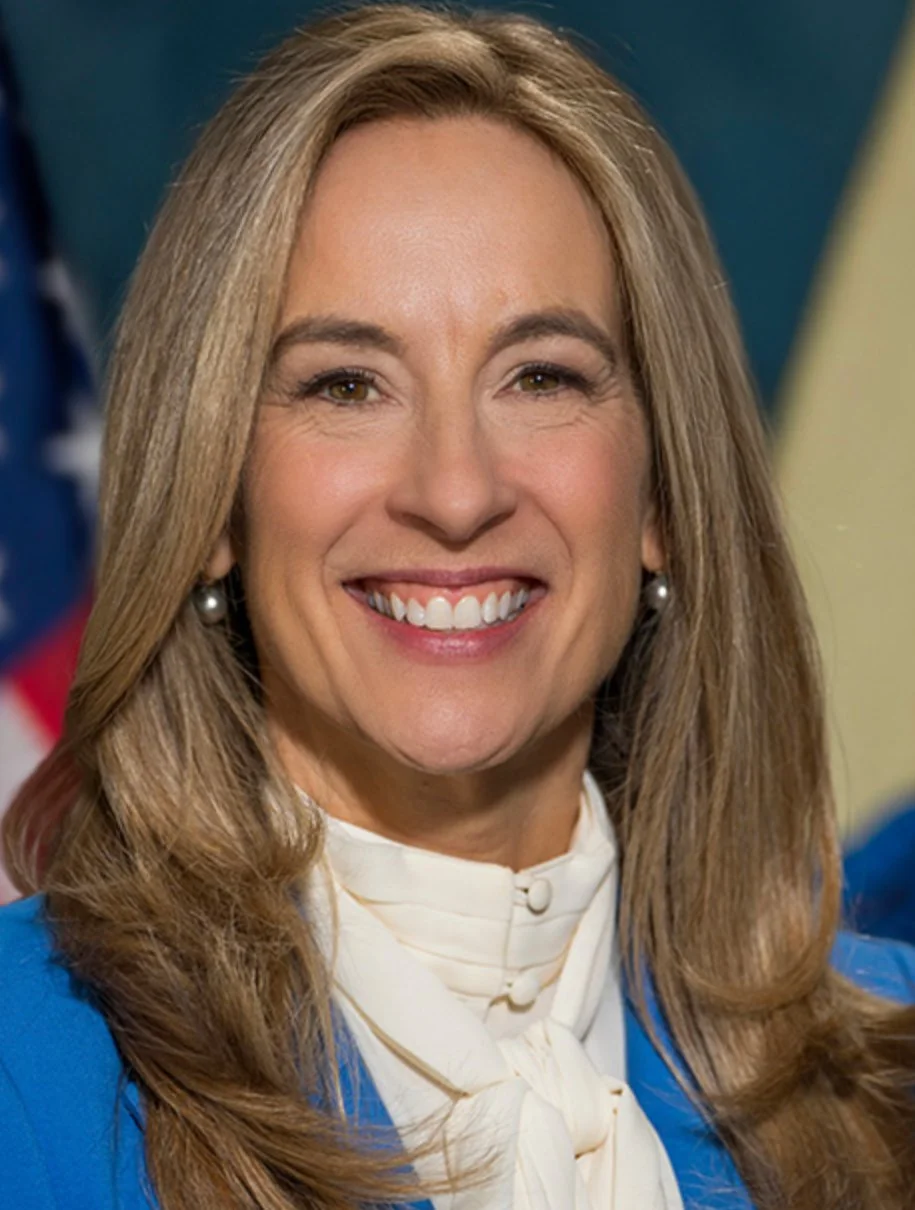
Governor Mikie Sherrill. As of January 20, 2026, Mikie Sherrill (Democrat) is the 57th and current Governor of New Jersey. A former Navy helicopter pilot and congresswoman, she assumed office after winning the 2025 election and is the first Democratic female governor in the state's history

As of February 24, 2026, Dr. Lily Laux is the Commissioner of the New Jersey Department of Education. Appointed by Governor Mikie Sherrill, she serves as the state’s chief executive school officer, supervising all public schools, managing the Department of Education, and serving as a member of the Governor's cabinet.
Download Contact List
Important Dates
Fall 2025
NJGPA Fall Administration (Class of 2026 students needing to meet graduation requirements) October 6–10, 2025 | Makeup: October 14–17, 2025
NJGPA-Adaptive Fall Field Test (Grade 11) October 27–November 14, 2025 | No testing on November 4, 6, 7, or 11
NJSLA-Adaptive Fall Field Test (ELA Grades 4–10; Math Grades 4–HS) October 27–November 14, 2025 | No testing on November 4, 6, 7, or 11
Winter/Spring 2026
Portfolio Appeals (Grade 12) January 6–May 1, 2026
WIDA ACCESS / Alternate ACCESS (K–12) February 2–March 27, 2026 | Makeup: March 30–April 3, 2026
NJGPA-Adaptive Spring Administration (Grade 11) March 16–April 1, 2026 (Note: the window was extended by 3 days from the original closing date)
DLM Year-End Model (ELA/Math Grades 3–8 & 11; Science Grades 5, 8 & 11) April 6–May 22, 2026 | Makeup: May 26–29, 2026
NJSLA-Adaptive Spring Administration (ELA Grades 3–9; Math Grades 3–HS) April 27–May 29, 2026
NJSLA-Science (Grades 5, 8 & 11) April 27–May 29, 2026
A few notable context points for 2025–26:
This is the first operational year for the NJSLA-Adaptive and NJGPA-Adaptive; both are new computer-adaptive assessments replacing the prior fixed-form versions. Because adaptive tests adjust to each student's performance in real time, unit lengths have been standardized: ELA-Reading is two 75-minute sessions (150 min total), ELA-Writing is one 90-minute session, and Mathematics mirrors ELA-Reading at two 75-minute sessions.
Districts may make use of the full testing window for regular and makeup administration, but must ensure each student has both a regular testing date and a makeup opportunity.
RFP Summary (year)
Summary: NJDOE RFQ 25-004 — New Jersey ELA & Mathematics Next Generation Statewide Assessment Program
This is the most recent procurement that resulted in the current NJSLA/NJGPA contract, awarded to Cambium Assessment, Inc. (CAI). The solicitation was issued by the NJDOE's Office of Budget and Accounting as a Request for Quotes (RFQ), with bidder questions due in November 2024 and proposals due December 6, 2024.
Scope of Work
The contract covers the full administration, scoring, and reporting of the New Jersey ELA and Mathematics statewide assessment program, including both the NJSLA (Grades 3–9 ELA; Grades 3–HS Math) and the NJGPA (Grade 11 graduation proficiency assessment).
The assessments are designed as computer-adaptive tests (CAT), with vendors expected to bring a licensed item bank as the starting foundation. New item development would then focus on New Jersey standards and become property of New Jersey upon creation.
Contract Structure
The base contract is three years:
Year 1: 2024–2025 academic year (no operational administration; field test only)
Year 2: 2025–2026 (first operational administration, Spring 2026)
Year 3: 2026–2027
There are also two optional extension years covering 2027–2028 and 2028–2029.
Key Technical Requirements
The vendor must field-test items prior to the first operational administration to establish baseline statistics using New Jersey student data.
For the NJGPA specifically, all items must be field-tested in New Jersey before operational use, as graduation-readiness conclusions are drawn from results.
Scoring engines for constructed-response items must be trained using New Jersey educator rubric interpretations and NJ student data.
Mathematics assessments are offered in Spanish; ELA assessments are not, though test administration scripts are translated into the top 10 languages spoken in New Jersey.
All items developed under the contract become property of New Jersey; the vendor retains rights only to items developed prior to the contract or outside of it.
Data retention for most assessment components is required for seven years.
Key Personnel Required (minimum)
Resumes must be provided for: a Project Manager, Psychometrician(s), Lead Content Specialist(s), and Lead Data Specialist(s).
Administration Volumes (for reference)
Annual customer support contact volumes from the prior contract were approximately 1,077 contacts for NJGPA (584 phone, 329 chat, 164 email/web) and 2,948 contacts for NJSLA (2,154 phone, 586 chat, 208 email/web).
Past Proposals
Cambium

HMH

Pearson
RFP Award Calculator
Legislative Summary
Published: May 2, 2026
Assessment Home
NJDOE Assessment Overview — main hub for all NJ statewide assessments
NJSLA / NJGPA Resources
NJSLA/NJGPA Resources Page — district/educator resources, blueprints, technical reports, forms & templates
NJSLA-Adaptive & NJGPA-Adaptive (New Platform) — overview of the new CAI/Cambium adaptive assessments launched 2025–26
Graduation Assessment Requirements — NJGPA graduation pathway requirements
Parent Portal (Pearson) — score interpretation guides, practice tests, parent-facing resources
Testing Schedules
2025–26 Statewide Assessment Testing Schedule — official updated schedule from NJDOE
Results & Data
Statewide Assessment Reports (2024–25) — official results data files
Spring 2024 NJSLA/DLM Results Broadcast — NJDOE district broadcast (Sept. 2024)
Spring 2025 NJGPA Results Broadcast — NJDOE district broadcast (June 2025)
Spring 2024 NJSLA Results Presentation to State Board — full slide deck presented Dec. 2024
News & Analysis — Results Coverage
2024–25 School Year Results (released Nov./Dec. 2025)
NJ Education Report: "NJ DOE Releases Statewide Test Scores" (Dec. 2025) — Students showed marginal improvements but remain below pre-pandemic levels; 81% of NJGPA students passed ELA (down 1 pt), 55.8% passed math (up 3 pts)
Chalkbeat: "NJ State Tests — Reading, Math Gaps Close as Learners Make Gradual Gains" (Dec. 2025) — Statewide, 53% of students passed ELA and 41% passed math, each up about 1 percentage point from 2024, though still behind 2019 pre-pandemic rates
NJ Spotlight News: "NJ Released School Test Scores — See Results for Every District" (Dec. 2025) — district-level searchable results
NJ Spotlight News: 2025 School Test Results Interactive Table — searchable by district
State Test Score Results Substack: "NJ 2025 Assessment Results" (Dec. 2025) — ELA proficiency rose to 53.6% (from 50.8% in 2024); math rose to 41% (from 38.6% in 2024), though neither subject has reached pre-pandemic levels
2023–24 School Year Results (released Dec. 2024)
NJ Education Report: "NJ Ed Department Releases Statewide Test Scores" (Dec. 2024) — 82% of NJGPA students designated graduation-ready in ELA; 55.6% in math; achievement gaps between student groups described as significant
Chalkbeat: "2024 NJ State Tests — Reading, Math Scores Show Gradual Gains" (Dec. 2024) — Newark-focused analysis with statewide context
2022–23 School Year Results
NJ Education Report: "State Ed Department Publicly Discloses Student Test Results" (Dec. 2023) — includes State Board discussion and NJGPA vs. NJSLA score discrepancy analysis
New Adaptive Platform & Procurement Context
NJSBA: "NJDOE Announces New Statewide Assessments" (Aug. 2025) — announcement of NJSLA-A and NJGPA-A partnership with Cambium Assessment
The Digest Online: "AI Will Grade NJ State Exams This Spring" (March 2026) — covers AI essay scoring concerns and the $58.7 million Cambium contract; notes that about 90% of prior NJSLA essays were already scored by automated systems
NJDOE Bidder Q&A — RFQ 25-004 (Nov. 2024) — procurement Q&A document revealing scope, structure, and requirements of the current Cambium contract
The Legislature: Structure & Composition
The New Jersey Legislature is a bicameral body consisting of two chambers — the Senate (upper house) and the General Assembly (lower house) — seated in the State House in Trenton.
Districts & Representation
Members of the New Jersey Legislature are chosen from 40 electoral districts. Each district elects one Senator and two Assembly members. New Jersey is one of seven U.S. states in which districts for the upper and lower house of the legislature are coterminous.
The Senate has 40 members serving four-year terms. Senators must be a minimum of 30 years old and a resident of the state for four years to be eligible to serve. Senators last stood for election statewide in 2023; the next Senate elections are scheduled for 2027.
The General Assembly has 80 members. Two members are elected from each of New Jersey's 40 legislative districts using plurality block voting for a term of two years. All 80 Assembly seats are up for election every two years.
Leadership
The General Assembly is headed by a Speaker, while the Senate is headed by a President. Each house also has a majority leader, a minority leader, assistant leaders, and whips.
The key education committee chairs for the current (2024–2026) legislative session are: Assembly Education Committee — Verlina Reynolds-Jackson (D-District 15); Assembly Higher Education Committee — Linda S. Carter (D-District 22).
Compensation & Session
Service as a State Senator or Member of the General Assembly is considered part-time, and most legislators have other employment. Effective 2002, the annual base salary was $49,000. Beginning in 2026, the base salary will increase to $82,000. Additionally, each legislator receives an annual allowance of $150,000 for staff salaries.
Legislative terms run on a two-year cycle. Article IV of the New Jersey Constitution provides that each Legislature is constituted for a term of two years, split into two annual sessions. At the end of the second year, all unfinished business expires.
Current Political Landscape
New Jersey has a Democratic trifecta and a Democratic triplex. The Democratic Party controls the offices of governor, secretary of state, attorney general, and both chambers of the state legislature.
Following the November 2025 elections, Democrats significantly expanded their power. Democrats won a 57–23 majority in the General Assembly in 2025. The Senate, which was not on the ballot in 2025, remains at a 25–15 Democratic majority from the 2023 elections. Democrats secured a legislative supermajority in the Assembly, their largest margin in decades.
Governor: Governor Mikie Sherrill was inaugurated on January 20, 2026, succeeding term-limited Phil Murphy. Sherrill appointed Lily Laux as Commissioner of Education, replacing Kevin Dehmer. The new 222nd Legislature convened January 13, 2026, and the 2026–2027 session is now underway.
Legislative Year in Review: 2024–2025 Session
The 221st Legislature (2024–2025) was active on education, with major themes including literacy, early childhood expansion, educator evaluation reform, and — most significantly for assessment — a direct challenge to the NJGPA graduation exam.
I. Assessment & Accountability
NJGPA Elimination Bill (A-4121) — The most significant assessment-related action of the session
On December 8, 2025, the New Jersey State Assembly passed a bill by a 55–17 vote to eliminate the New Jersey Graduation Proficiency Assessment (NJGPA). Sponsored by Assemblywoman Michele Matsikoudis (R-Union), the bill (A-4121) would prohibit the State Board of Education from including a statewide graduation proficiency test in its standards for high school graduation or requiring it as a prerequisite to receiving a state-endorsed diploma.
The bill's supporters argued that the exam had lost its utility. Matsikoudis said before the Education Committee vote: "Students do not take it seriously. Districts can't rely on the results. The data simply does not reflect real student learning. At the same time, administering this test pulls valuable time and resources from classroom instruction."
Opponents raised accountability concerns. Critics noted that the vote came at the same time the state was rolling out the new adaptive NJSLA with little clarity on whether results would be comparable across districts or aligned to any consistent performance standard, potentially leaving New Jersey in a period where understanding how schools are performing becomes near-impossible.
The bill did not advance in the Senate before the session ended January 13, 2026, and any bills not signed into law before the end of the session needed to be reintroduced and moved through the normal legislative process in the new 222nd Legislature. This bill was not signed and effectively died, meaning the NJGPA remains in place — now in its new adaptive form.
Educator Evaluation Reform (S-2082/A-3413 — P.L.2024, c.14)
Governor Murphy signed legislation establishing the New Jersey Educator Evaluation Review Task Force to study and evaluate the educator evaluation system. Under the law, teachers are not to collect new student growth observation (SGO) data in the 2024–2025 school year, and are instead to use existing SGO data from the most recent year in which the educator completed SGOs for evaluation purposes. A follow-on bill in 2025 extended this SGO pause into the following year.
Teacher Certification Testing (A-1669 — P.L.2024, c.26)
Signed June 28, 2024, this law removes obstacles to teacher certification, repealing the requirement for teaching candidates to take basic skills tests in reading, writing, and math as a prerequisite for an instructional certificate.
II. Literacy & Early Learning
Literacy Framework Bills (S-2644/A-4303 and A-2288/S-2647)
Signed August 2024, these two bills were the Murphy administration's signature literacy response to persistent post-pandemic score gaps. The first bill establishes a Working Group on Student Literacy to make recommendations on evidence-based literacy strategies and screening methods. Districts are required to conduct literacy screenings at least twice annually for students in grades K–3, beginning in the 2025–2026 school year. Districts must notify parents and guardians of their child's results within 30 days of the close of the initial screening period. The second bill establishes the Office of Learning Equity and Academic Recovery in the Department of Education to promote student literacy and advance learning equity through data-driven decisions, resource coordination, and best practices research.
Universal Preschool Expansion (S-3910/A-5717 and related bills)
Signed July 9, 2025, the "New Jersey Universal Preschool and Kindergarten Act" requires the NJDOE to provide annual preschool expansion grants, codifies preschool education aid requirements, establishes a three-year Preschool Cost-Sharing Pilot Program, and creates a Universal Preschool Implementation Steering Committee. The FY2026 budget included a $34.6 million increase in preschool education aid, bringing the total to $1.27 billion.
III. Other Notable Education Legislation
Cell Phone / Internet Device Policy (A-4882/S-3695 — P.L.2025, c.195)
Signed January 8, 2026, this law requires the NJDOE to develop guidelines on student use of internet-enabled devices and will require each board of education to adopt a policy consistent with those guidelines beginning with the 2026–2027 school year. The guidelines will prohibit the non-academic use of internet-enabled devices on school grounds during the school day.
Cursive Handwriting Instruction (S-1783 — P.L.2025, c.284)
Signed January 19, 2026, this law requires school districts to incorporate instruction on cursive handwriting into the curriculum for students in elementary schools, with students expected to be proficient in reading and writing cursive legibly by the end of third grade.
Charter School Transparency (A-5936/S-4713 — P.L.2025, c.277)
Signed January 20, 2026, this law establishes new transparency and accountability requirements for charter school operators.
CTE Teacher Certification (A-5824/S-4515 — P.L.2025, c.216)
Signed January 12, 2026, this law prohibits the State Board of Education from requiring a candidate for a certificate of eligibility in a career and technical education endorsement to complete an educator preparation program that exceeds 200 hours of instruction or one academic year.
Looking Ahead: 2026–2027 Session
The new 222nd Legislature convened in January 2026 under a stronger Democratic supermajority in the Assembly and the new Sherrill administration. Key education priorities likely to resurface include school funding formula reform, a potential reintroduction of NJGPA elimination legislation (or a replacement accountability framework), and continued implementation of the adaptive NJSLA-A rollout. Governor Sherrill's new Commissioner of Education, Lily Laux, will set the tone for the administration's education agenda as it takes shape through the spring budget process.